
CPQ Software for Furniture Manufacturing
Buyers increasingly expect products to fit their space, style, and exact requirements, while manufacturers are under pressure to digitize planning, improve supplier collaboration, and increase visibility across the sales-to-production process. CPQ for furniture manufacturing is the answer to that tension.





Challenges for the Furniture Industry
Customization complexity
Longer coordination cycles
Higher process costs
Lack of visibility and scalability
How Does CPQ Transform Furniture Manufacturing?

Centralized and error-free configuration
CPQ for furniture manufacturers brings all product logic into one place. Instead of relying on scattered spreadsheets or internal know-how, every rule — from dimensions to material compatibility — is embedded directly into the system. This ensures that only valid configurations are possible, regardless of who is using it. As a result, errors are drastically reduced, and sales teams no longer depend on engineering for routine validation.

Real-time and accurate pricing
With CPQ for furniture manufacturing, pricing is no longer a manual process. Every configuration change instantly updates the price based on predefined rules, cost structures, and customer-specific conditions. This eliminates guesswork and delays, ensuring that every quote is both fast and financially accurate. It also protects margins by preventing inconsistent discounts and pricing mistakes.

Instant quote generation
Custom furniture CPQ solutions remove one of the biggest bottlenecks in the sales process — quote creation. Once a product is configured, the system automatically generates a professional, ready-to-send quote. What previously required multiple steps and internal coordination now happens in seconds, allowing sales teams to respond faster and close deals more efficiently.

Visual and intuitive buying experience
CPQ software for furniture enhances the customer journey through photorealistic 3D visualization. Buyers can see exactly how their product will look, explore different variations, and make confident decisions without uncertainty. This not only improves user experience but also increases engagement, shortens decision cycles, and reduces the risk of returns.
Our Project Process
Case studies
CanvasLogic developed a cloud-based, real-time 3D kitchen configurator tailored to Nobilia’s requirements. This interactive solution allows potential buyers and dealers to design kitchens step-by-step, visualize changes instantly in photorealistic 3D, and proceed directly to quotes and orders.


Our team delivered a customized online door configurator for JOKA in just 10 weeks. The mobile-enabled, cross-platform tool features an intuitive user interface, ensuring a seamless user experience across multiple segments.
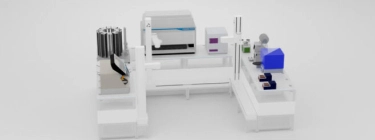

CanvasLogic helped deliver a SaaS-based product configurator that elevates the customer experience for the furniture manufacturer Rauch, while enhancing advisory services in retail stores. Online, it guides users through a structured and intuitive product selection process.
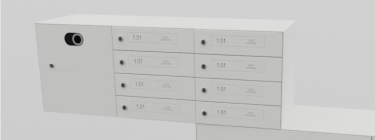

“It’s an absolutely revolutionary way to build a lab. No one is doing this in our space, and what CanvasLogic is doing for us has put us head and shoulders above the rest in our specific field. We’re able to easily communicate the value proposition of our platform, the modularity of our LINQ Bench to help people quickly understand how flexible our platform is.”
“CanvasLogic listened to our vision and developed unique solutions that enabled us to achieve our goals. We’re thrilled with the
outcome and excited that more and more of our resellers are choosing to integrate the Nobilia elements kitchen configurator into their websites and ecommerce systems.”
“From the start, the CanvasLogic team was receptive to our ideas and feedback, and took the time to understand how the configuration tool could integrate with and develop our business model.”
Why Is CanvasLogic the Best Choice for CPQ Solutions in the Furniture Industry?
A combination of strengths
Rules-based configuration, dynamic pricing, immediate quoting, photorealistic 3D, AR, guided selling, strong integrations, and rollout across direct and dealer channels. That combination is exactly what a furniture manufacturer needs when customization has to be both sellable and buildable.
Social proof
CanvasLogic has been among the leaders in the industry since 2001, serving clients in 20+ countries, creating 1,000+ configurators, and supporting 100+ million configuration variants. Our testimonials and case studies reinforce the core story: we are not a concept vendor. We are a company built around helping businesses sell configurable products at scale.
Our goal
CanvasLogic helps furniture manufacturers turn product complexity into a faster, cleaner, more persuasive sales process. Customers can configure with confidence. Dealers can sell with consistency. Sales teams can quote faster. Operations can receive better data. And the business can grow without treating every custom order like a special exception. That is the clearest business case the category research supports.
FAQ.
What exactly is a furniture configurator or CPQ software?
A furniture configurator lets users choose dimensions, materials, finishes, modules, and accessories in a guided workflow while the system checks what is actually valid. Configure-price-quote adds the commercial layer: real-time price calculation, discount logic, and automatic quote generation. In the strongest furniture setups, that is combined with 3D or AR so the configured product can be seen as well as priced.
How does price calculation work in the 3D furniture configurator?
The price is driven by rules stored in the background. When the user changes width, material, accessories, equipment, or other options, the price updates automatically according to the relevant pricing model. Good CPQ can also account for customer role, dealer conditions, channel logic, quantities, discounts, currencies, and margin rules, which is why it is much more reliable than spreadsheet-based pricing.
How long does it take to turn the configuration into a finished quote?
Once the rules and templates are in place, the handoff from completed configuration to finished quote is typically immediate or takes only a few minutes. Competitor pages aimed at furniture stress this speed repeatedly because it is one of the clearest commercial wins of CPQ. The separate question is implementation time, and here CanvasLogic’s own guidance is that timelines vary by complexity and integration scope.
Is the configurator only suitable for online sales or also for dealers, showrooms, and sales partners?
It should support all of them. Furniture CPQ is most valuable when the same logic powers ecommerce, internal sales, showrooms, and partner or dealer channels. That is how you avoid having one price online, another in the showroom, and a third in the dealer portal. Competitor pages and the Nobilia case study both make this omnichannel and dealer-network value very explicit.
How much does the furniture configurator or CPQ solution cost?
There is no honest flat price for a serious CPQ for furniture manufacturers, because every business has a different level of complexity. The final investment depends on how your products are structured, how many configurable product families you offer, and how detailed your rules and pricing logic need to be. A simple catalog with limited variations requires a very different setup compared to a highly modular product line with thousands or even millions of possible combinations.
Visual scope also plays a major role. Photorealistic 3D, augmented reality, and advanced interaction scenarios require additional modeling and optimization work, especially if you want the experience to be fast and seamless across web and mobile devices. At the same time, integrations with existing systems such as ERP, CRM, ecommerce platforms, or dealer portals influence both the implementation effort and the long-term value of the solution.
Can my CPQ integrate with my existing quoting system for furniture software?
Yes, and in fact, integration is one of the most important requirements for any modern CPQ for furniture manufacturing. A configurator that works in isolation quickly becomes another disconnected tool, which defeats its purpose. The real value of CPQ comes from its ability to connect configuration, pricing, and quoting with the rest of your business ecosystem.
In practice, this means that your CPQ solution can integrate with ERP systems to ensure that configured products align with production capabilities, materials, and lead times. It can connect to CRM platforms so that customer data, deal history, and pricing conditions are automatically applied during the sales process. It can also work with ecommerce platforms and dealer portals, ensuring that the same product logic and pricing rules are used consistently across all channels.