
CPQ for B2B Ecommerce
B2B buyers increasingly want to research, configure, and price solutions digitally — often with minimal seller interaction — yet many B2B catalogs and pricing models are too complex for “add to cart” commerce. CPQ (Configure, Price, Quote) bridges this gap by turning product rules, pricing governance, and quoting into an automated buying workflow that runs across ecommerce storefronts, partner portals, and sales-assisted channels.





Benefits of CPQ in Ecommerce
CPQ for B2B ecommerce delivers up to $6.22 in value for every $1 invested over three years
CPQ achieves an average ROI of 121%, with payback in as little as 16 months
CPQ increases engagement, with users spending up to 40% more time configuring products
CPQ ecommerce boosts revenue, driving up to 27% higher order values through complementary suggestions
CPQ Software Capabilities for Ecommerce

Visual configuration (3D) + AR
Higher buyer confidence for complex purchases; fewer misunderstandings and “spec” errors that show up late.

Rules-driven configuration engine
Prevents invalid combinations, reduces rework, and supports scaling catalogs without a proportional increase in headcount.

Guided selling
Reduces buyer “analysis paralysis,” helps less-technical sellers/partners quote correctly, and improves conversion in self-service.

Ecommerce embed and “quote-to-order” continuity
Turns “request a quote” dead-ends into a guided ecommerce flow; reduces friction from configuration to purchase.

Automated quote/proposal generation
Shortens quote cycles, standardizes documents, and reduces manual formatting and copy/paste errors.

Omnichannel support (sales + distributors + self-serve)
Consistent quoting rules and pricing across every channel; fewer channel-conflict disputes.
Third-Party Ecommerce Software Integrations







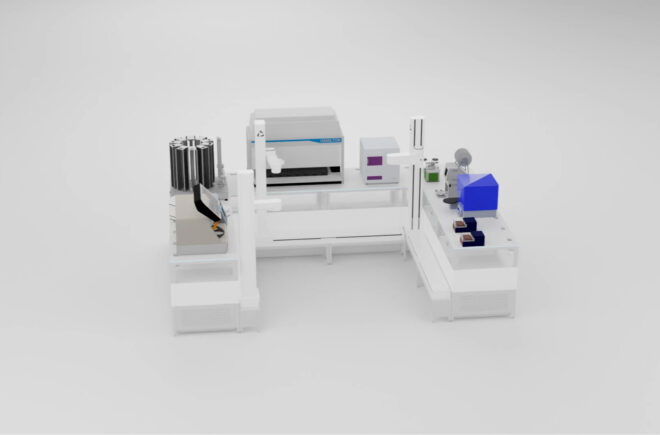
Automata, recognized for its easy-to-use industrial robots
Acknowledging the complex and repetitive tasks common in biolabs, Automata applied its automation expertise to create solutions that boost productivity and precision in these environments.

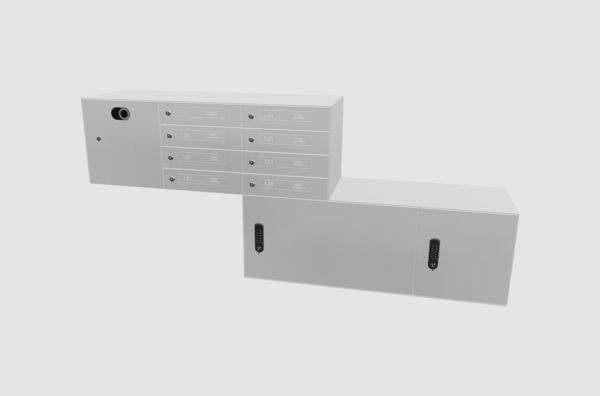
eSafe, transforming parcel system design with smart 3D configuration
eSafe teamed up with CanvasLogic to launch a 3D configurator that suggests smart layouts, enables drag-and-drop design, and shows setups in realistic environments — all integrated with their online store.

Nobilia, accelerating digital sales with its immersive 3D kitchen configurator
Responding to rising demand for fast and flexible kitchen design, Nobilia teamed up with CanvasLogic to launch a browser-based 3D configurator. The solution empowers customers and dealers to design kitchens step-by-step in real time, boosting engagement, order accuracy, and conversion.

FAQ.
Why do companies need CPQ?
Companies adopt CPQ when selling involves complex configurations, negotiated pricing, and quote documents that must be accurate and consistent. CPQ centralizes rules (what can be sold), pricing logic (what it costs), and quoting (how it’s presented), reducing spreadsheet dependence and errors. In a market context, Gartner’s survey-based finding that a majority of buyers prefer rep-free experiences increases pressure to make complex purchases “self-servable,” which CPQ enables.
How does CPQ fit into the sales process?
A typical CPQ for ecommerce flow is: requirements → configuration → automated pricing → approvals (if needed) → quote generation → handoff to ERP/fulfillment.
How does CanvasLogic simplify the CPQ process?
CanvasLogic combines CPQ logic with 3D/AR so buyers can see what they’re ordering while rules and pricing update in real time. It also offers guided selling, fast quote generation (branded PDFs), omnichannel use, and integration into CRM/ERP/PIM environments.
What is the cost of integrating CPQ software into a B2B ecommerce project?
Integration cost is typically driven by (a) product model complexity and the number of rules/price lists, (b) required systems (ecommerce, CRM, ERP, PIM/PLM), (c) migration/creation of 3D assets, and (d) the desired buying flow (quote-only vs quote-to-cart vs full quote-to-cash).